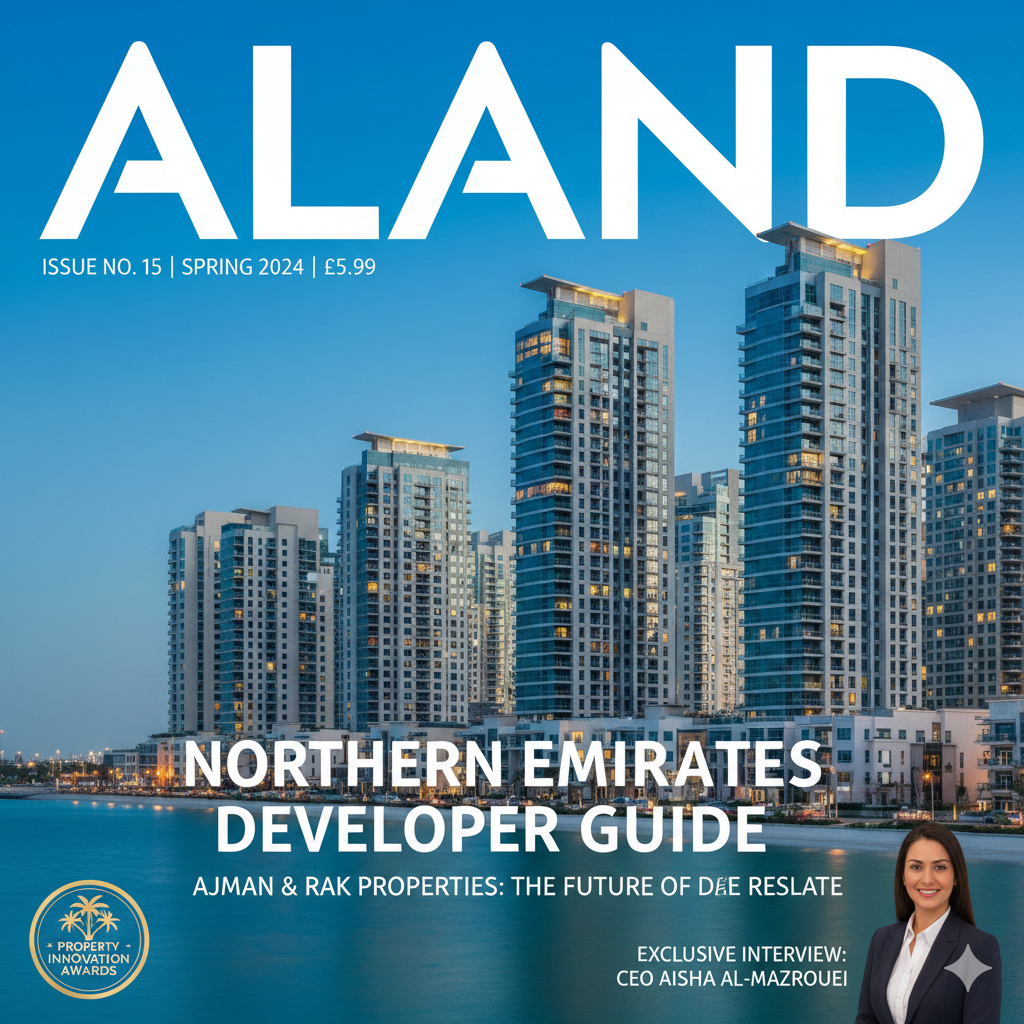
Ajman and RAK Properties: Northern Emirates Developer Guide
- Published Date: 4th Jan, 2026
-
4.9★ ★ ★ ★ ★(125)
By Dr. Pooyan Ghamari
Executive Summary
The northern emirates of Ajman and Ras Al Khaimah have emerged as compelling alternatives in the UAE real estate landscape, offering affordability, high yields, and growth potential into 2026. Ajman recorded transactions exceeding AED 25 billion by November 2025, driven by competitive pricing and proximity to Dubai, while Ras Al Khaimah achieved AED 15 billion in 2024 with momentum continuing through substantial launches and tourism catalysts.
Key developers in Ajman include Aqaar, Al Zorah Development, and FAM Holding, focusing on waterfront and community projects. In Ras Al Khaimah, RAK Properties, Marjan, Al Hamra, and international entrants like Aldar and Ellington lead with luxury waterfront and branded residences, amplified by the Wynn Al Marjan Island resort progressing toward 2027 opening.
Rental yields average 8 to 10 percent in Ajman and 7 to 9 percent in Ras Al Khaimah, outperforming southern emirates in income generation, with appreciation of 5 to 15 percent projected amid infrastructure expansions. These markets suit value and lifestyle investors, balancing immediate returns with long-term uplift in maturing ecosystems.
Company and Market Background
Ajman and Ras Al Khaimah represent the dynamic northern segment of UAE real estate, benefiting from spillover demand, infrastructure upgrades, and distinct positioning. Ajman, the smallest emirate, posted robust 2025 performance with transactions surpassing AED 25 billion year-to-date, reflecting 30 to 50 percent monthly growth rates and appeal through entry prices 30 to 50 percent below Dubai equivalents.
Ras Al Khaimah accelerated as the fastest-growing market, with transaction values doubling in recent cycles and apartment prices rising 17 to 21 percent annually, fueled by tourism targets and mega-projects like Wynn Al Marjan Island.
Developers in Ajman prioritize affordable master communities, with Aqaar advancing Al Zorah's eco-luxury vision and others expanding mid-tier residential towers. Ras Al Khaimah attracts global players, with Marjan master-planning islands, RAK Properties delivering hospitality-integrated schemes, and Al Hamra enhancing golf and waterfront lifestyles.
Both emirates leverage Golden Visa access and freehold ownership, drawing diverse buyers. Forecasts for 2026 anticipate moderated yet positive growth, with Ajman emphasizing yield stability and Ras Al Khaimah capitalizing on luxury tourism inflows amid 14,000 upcoming units.
Detailed Analysis
Ajman and Ras Al Khaimah embody contrasting yet complementary asset classes in the northern emirates, with Ajman excelling in value-driven ready and off-plan properties and Ras Al Khaimah prioritizing premium waterfront growth. Ajman's market focuses on affordable apartments and townhouses, often priced 40 to 60 percent below comparable Dubai units, delivering yields of 8 to 10 percent through high occupancy from commuters and families. Projects like Al Zorah provide immediate lifestyle benefits with established amenities, supporting steady appreciation of 5 to 8 percent as connectivity improves.
Off-plan in Ajman captures discounts and phased payments, appealing for entry-level growth in areas like Emirates City or Al Helio, where demand sustains resale liquidity.
Ras Al Khaimah's class emphasizes branded and beachfront assets, with prices rising 18 to 30 percent in hotspots like Al Marjan Island and Mina Al Arab. Ready properties offer tourism-linked income around 7 to 9 percent, enhanced by resort proximity, while off-plan dominates with 80 to 90 percent sell-out rates, projecting 10 to 15 percent uplifts tied to Wynn catalyst and infrastructure.
Ajman's approach mitigates volatility through end-user absorption and lower entry barriers, favoring income stability, whereas Ras Al Khaimah's speculative premium drives higher total returns in growth corridors. Combined, they diversify portfolios: Ajman for reliable cash flow and Ras Al Khaimah for appreciation in an evolving luxury destination.
Pros and Cons
Northern emirates investments in Ajman and Ras Al Khaimah provide superior yields and accessibility, with Ajman offering 8 to 10 percent returns on modest capital and Ras Al Khaimah blending income with tourism upside. Affordable pricing broadens participation, while proximity to Dubai supports commuter demand and occupancy exceeding 90 percent in prime segments. Developers deliver integrated communities with schools, retail, and green spaces, enhancing long-term value and lifestyle appeal. Infrastructure advancements, including rail links and airport expansions, underpin sustained growth without southern market saturation risks.
However, liquidity trails Dubai in secondary resales outside core districts, and supply increases could moderate short-term gains in mid-tier areas. Maturing ecosystems may involve temporary construction impacts, and premium Ras Al Khaimah segments require higher commitments reflecting branded positioning.
Compared to established emirates, northern options prioritize value and yield over immediate prestige, suiting patient strategies focused on compounding returns through rental stability and emerging catalysts.
Buyer Recommendations
Profiles vary across the northern emirates.
The yield-focused commuter or family favors Ajman's ready properties in accessible communities like Al Yasmeen or Al Zorah. These buyers secure 8 to 10 percent income with affordable entry, prioritizing schools and connectivity for long-term residency. Diversify into apartments for steady occupancy.
The appreciation-oriented lifestyle investor targets Ras Al Khaimah's waterfront off-plan from established developers. These purchasers leverage Wynn proximity in Al Marjan or Mina Al Arab, aiming for 10 to 15 percent gains plus 7 to 9 percent yields post-handover. Focus on branded residences for premium uplift.
For northern allocations, consider this checklist:
- Evaluate yield projections against 8 percent minimum for sustainability.
- Confirm developer delivery history and project phasing.
- Assess location access to highways and future transport.
- Verify freehold eligibility and Golden Visa thresholds.
- Review rental comparables in target communities.
- Limit off-plan exposure amid supply pipelines.
- Engage valuation for pricing fairness.
- Diversify between Ajman stability and RAK growth.
- Monitor tourism and population indicators quarterly.
- Secure contract reviews for milestones and exits.
ALand
ALand FZE operates under a valid Business License issued by Sharjah Publishing City Free Zone, Government of Sharjah (License No. 4204524.01).
Under its licensed activities, ALand provides independent real estate consulting, commercial intermediation, and investment advisory services worldwide. Through a structured network of cooperation with licensed developers, brokers, and real estate firms in the UAE and internationally, ALand assists clients in identifying suitable opportunities, evaluating conditions, and navigating transactions in a secure and informed manner.
ALand’s role is to support clients in finding the best available offers under the most appropriate conditions, using professional market analysis, verified partner connections, and transparent advisory processes designed to protect client interests and reduce execution risk. All regulated brokerage, sales, and transaction execution are carried out exclusively by the relevant licensed entities in each jurisdiction.
In addition, ALand is authorized to enter consultancy and cooperation agreements with real estate corporations, developers, and professional advisory firms across multiple countries, enabling the delivery of cross-border real estate consulting and intermediation services tailored to the needs of international investors and institutions.
FAQ's
What distinguishes Ajman and Ras Al Khaimah markets?
Which developers lead in Ajman?
What yields can northern emirates deliver?
How has Ajman performed in 2025?
What catalyzes Ras Al Khaimah growth?
Who dominates Ras Al Khaimah development?
Is off-plan prevalent in these emirates?
What appreciation is forecasted for 2026?