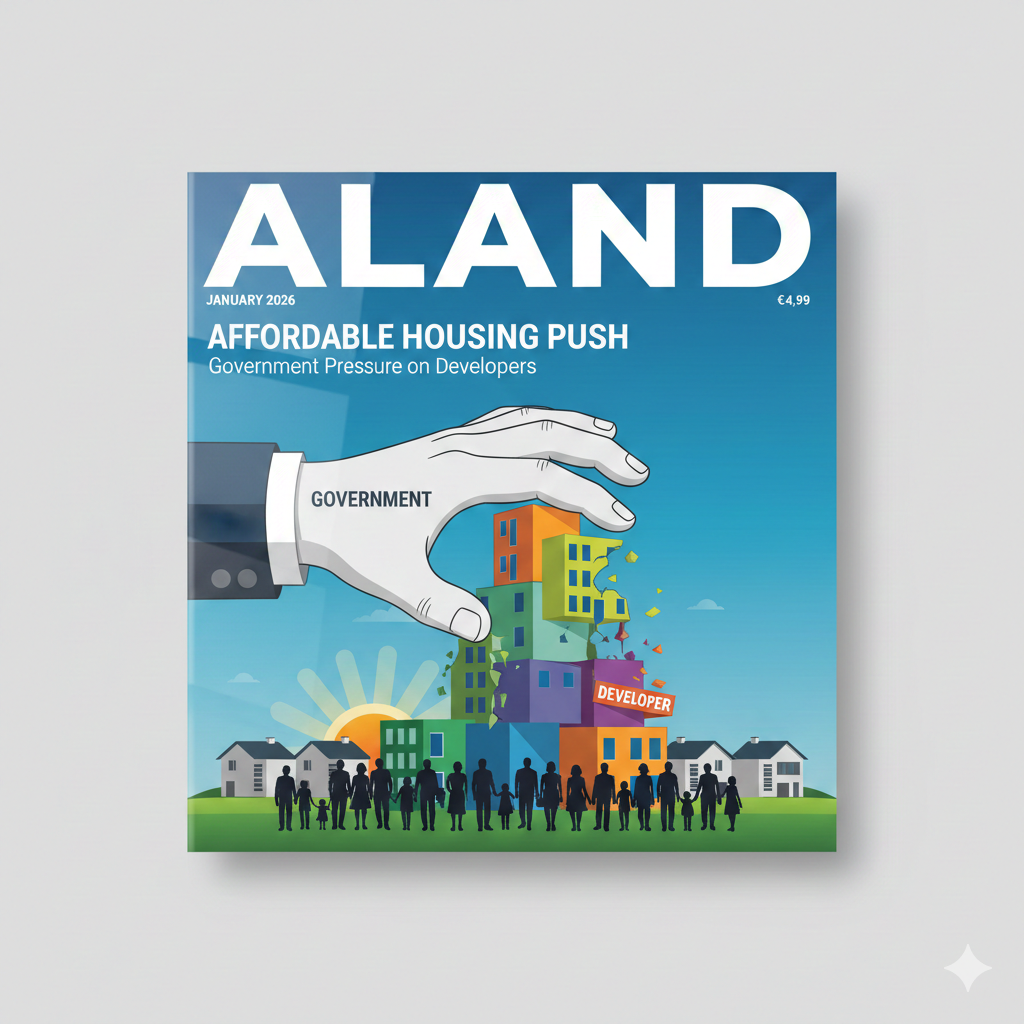
Affordable Housing Push: Government Pressure on Developers
- Published Date: 31 Jan, 2026
-
4.6★ ★ ★ ★ ★(117)
By Dr. Pooyan Ghamari
Government Initiatives Driving Affordable Housing Expansion in 2026
The United Arab Emirates intensifies efforts to address housing affordability in 2026, with federal and emirate-level programs creating structured pressure on developers to contribute to mid-market and accessible segments. Amid population growth, expatriate inflows, and economic diversification, authorities prioritize inclusive development to support workforce stability, family formation, and talent retention in non-oil sectors. Key frameworks include Dubai's Affordable Housing Policy aligned with the Dubai 2040 Urban Master Plan, Abu Dhabi's expansions under the Sheikh Zayed Housing Programme and local incentives, and broader national commitments through the Ministry of Energy and Infrastructure.
Dubai advances plans for over 17,000 affordable units across designated areas, targeting skilled professionals and middle-income groups with phased deliveries starting from 2025 into 2026 and beyond. Abu Dhabi focuses on large-scale community developments, with thousands of units planned through 2029, incorporating subsidies, extended loan terms, and partnerships to ease access. Sharjah positions itself as a value-driven alternative, benefiting from proximity to major hubs and government-backed land allocations for citizens, while mid-market options attract cost-conscious residents.
This push manifests through incentives like priority access, flexible payments, public-private collaborations, and regulatory enhancements that encourage developers to shift resources toward affordable and mid-range projects. The emphasis reduces reliance on luxury segments, fostering balanced urban growth and mitigating pressures from rapid demographic expansion.
Company and Market Background
Major developers adapt to governmental directives on affordability. Aldar Properties in Abu Dhabi pivots toward mid-tier offerings priced between AED 500,000 and AED 3 million, alongside rental solutions for lower- and middle-income residents, responding to emerging shortages and population-driven needs. Emaar Properties maintains involvement in integrated communities with accessible elements, while DAMAC Properties and others explore value-oriented launches to capture broadening demand. Emerging and mid-sized firms increasingly participate through partnerships with housing authorities like the Mohammed Bin Rashid Housing Establishment in Dubai.
Market dynamics reflect this transition. In 2025, initiatives such as the First-Time Home Buyer Program in Dubai and expanded national housing approvals worth billions supported higher homeownership rates among citizens and eased entry for expatriates. Transaction volumes remain elevated, with mid-market segments showing resilience amid overall supply increases projected for 2026. Abu Dhabi anticipates manageable deliveries around 6,500 to 12,800 units in key years, while Dubai's pipeline includes significant affordable allocations. Sharjah gains traction as an affordable commuter hub, with steady interest from families and professionals.
Detailed Analysis
Developers balance two contrasting asset classes under affordability pressures: mid-range apartment blocks in urban and semi-urban zones versus family-focused townhouse and villa communities in planned outskirts.
Mid-range apartments target young professionals, essential workers, and first-time buyers seeking connectivity, amenities, and manageable costs. These projects incorporate efficient designs, shared facilities, and proximity to employment centers, benefiting from government incentives like priority land or financing support. They enable quicker delivery cycles and higher unit volumes to address immediate workforce housing gaps, with strong absorption from middle-income expatriates earning below certain thresholds. However, tighter margins compared to luxury require scale, cost controls, and precise location selection to maintain viability amid competition.
Townhouse and villa communities contrast by emphasizing family suitability, larger units, green spaces, schools, and community integration. These align with long-term stability goals, appealing to settled residents and citizens through subsidies or grants under programs like Sheikh Zayed Housing Programme. They offer enduring value through lower density, better livability, and resilience to market fluctuations, supported by infrastructure maturation. Challenges include extended timelines, higher land commitments, and dependence on sustained demand from demographic shifts.
The interplay demonstrates responsive strategies. Apartments provide rapid, volume-driven solutions to urban affordability pressures, capitalizing on incentives for quicker market entry. Villas and townhouses build sustainable neighborhoods that retain talent and support family-oriented growth. Developers frequently adopt hybrid models in master plans, blending both classes with shared sustainability and connectivity features. Overall, governmental directives foster diversification beyond high-end focus, ensuring projects meet inclusive needs while preserving quality and investment appeal.
Pros and Cons
Advantages for developers engaging with affordability mandates include access to government-backed incentives, such as land allocations, faster approvals, and partnerships that reduce risks and enhance feasibility. Mid-market projects achieve consistent absorption from broad buyer pools, including middle-income expatriates and citizens, supporting stable revenues and occupancy. Alignment with national visions strengthens brand positioning, attracts institutional interest, and opens funding avenues through public-private collaborations. Diversification into accessible segments mitigates luxury market volatility and taps into resilient demand drivers like population inflows.
Challenges involve compressed profit margins due to lower pricing points and higher compliance costs for quality standards or certifications. Precise execution proves essential to avoid delays in incentivized timelines, while competition intensifies from firms pivoting to mid-range offerings. Regulatory complexities and evolving affordability definitions require ongoing adaptation, and potential oversupply waves in 2026 could moderate growth in select areas despite overall absorption potential.
Buyer Recommendations
Middle-income professionals and first-time buyers benefit from mid-range apartments in well-connected zones supported by government programs. These offer affordability, modern amenities, rental flexibility, and strong liquidity in growing markets like Dubai and Abu Dhabi.
Families and long-term residents should target townhouse or villa options in emerging communities with incentives. These provide space, community features, and value appreciation aligned with sustained demographic and infrastructural support.
Checklist for Buyers:
- Research specific government incentives or programs applicable to the project
- Verify developer participation in affordable housing schemes
- Assess pricing alignment with mid-market benchmarks and subsidies
- Evaluate location connectivity to employment and services
- Review unit sizes and layouts for family or professional needs
- Check projected handover timelines against supply forecasts
- Analyze payment plans and financing options including mortgages
- Confirm quality standards and sustainability integrations
- Obtain independent valuation for long-term affordability
- Consider resale potential in evolving inclusive market segments
ALand
ALand FZE operates under a valid Business License issued by Sharjah Publishing City Free Zone, Government of Sharjah (License No. 4204524.01). Under its licensed activities, ALand provides independent real estate consulting, commercial intermediation, and investment advisory services worldwide. Through a structured network of cooperation with licensed developers, brokers, and real estate firms in the UAE and internationally, ALand assists clients in identifying suitable opportunities, evaluating conditions, and navigating transactions in a secure and informed manner. ALand’s role is to support clients in finding the best available offers under the most appropriate conditions, using professional market analysis, verified partner connections, and transparent advisory processes designed to protect client interests and reduce execution risk. All regulated brokerage, sales, and transaction execution are carried out exclusively by the relevant licensed entities in each jurisdiction. In addition, ALand is authorized to enter consultancy and cooperation agreements with real estate corporations, developers, and professional advisory firms across multiple countries, enabling the delivery of cross-border real estate consulting and intermediation services tailored to the needs of international investors and institutions.
FAQ's
What government programs drive affordable housing in the UAE in 2026?
How many affordable units are planned in Dubai for coming years?
Is Abu Dhabi focusing on affordable segments?
How does Sharjah fit into affordability trends?
Do developers face mandates or just incentives?
What impact might 2026 supply have on affordability?
Are these initiatives mainly for citizens or expatriates?
How do incentives benefit developers?